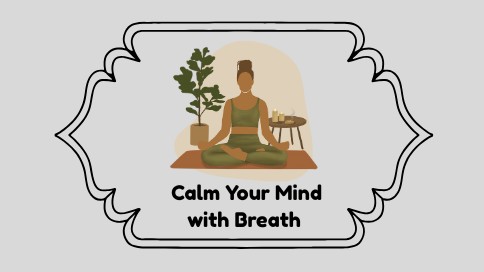
🌿 Breathing Techniques in Yoga: A Complete Beginner-Friendly Guide to Pranayama
Breathing is something we do automatically—about 20,000 times a day—yet most of us rarely think about how we breathe. In yoga, breath is more than just air entering and leaving the lungs. It is called Prana, meaning vital energy or life force.
Yoga believes that the way you breathe affects the way you feel, move, think, and function. Whether you're looking to reduce stress, increase energy, focus better, or support your mental health, yogic breathing techniques—known as Pranayama—offer powerful tools for transformation.
The best part?
You don’t need equipment, a yoga mat, or special flexibility.
Just your breath, awareness, and a few minutes each day.
In this complete guide, you’ll learn everything about yoga breathing techniques, how to practice them safely, and how they benefit your body and mind.
🧘 What Is Pranayama?
Pranayama comes from two Sanskrit words:
Prana – life force, energy, breath
Ayama – expansion, control, regulation
So Pranayama means the expansion and regulation of breath.
In yoga, breath is the bridge between the body and the mind. When breath is calm, the mind becomes calm. When breath is fast or shallow, the mind becomes restless.
Pranayama teaches you to breathe consciously—slowly, deeply, and rhythmically—to improve physical health and mental clarity.
🌬️ Why Breathing Techniques Are Important in Yoga
Breathing is directly connected to:
Heart rate
Stress levels
Emotions
Energy levels
Sleep
Hormonal balance
Brain function
When you breathe better, you live better.
Here are some scientifically-backed benefits of yogic breathing:
✔️ Reduces stress & anxiety
Deep breathing activates the parasympathetic nervous system—your body’s “relaxation mode.”
✔️ Improves lung capacity
Breathwork strengthens the diaphragm and respiratory system.
✔️ Boosts mental clarity
More oxygen = better concentration and focus.
✔️ Enhances energy levels
Certain techniques energize the nervous system and increase alertness.
✔️ Supports digestion
Breathwork massages internal organs and improves metabolism.
✔️ Helps with emotional stability
Calm breath brings emotional balance and reduces overthinking.
✔️ Improves sleep
Slow breathing helps your body shift into rest mode.
🌱 Who Can Practice Yoga Breathing Techniques?
Pranayama is safe for:
Beginners
Seniors
Kids
Office workers
People with anxiety
Individuals with low energy
Yoga practitioners
People who want to meditate
Almost anyone can practice Pranayama, but beginners should start slowly and never force their breath.
🧘♀️ Best Breathing Techniques in Yoga (Pranayama) for Beginners
Below are the most effective yoga breathing techniques, their benefits, and step-by-step instructions.
I’ve written them in simple language so even complete beginners can practice safely.
🫁 1. Diaphragmatic Breathing (Yogic Belly Breathing)
Difficulty: Beginner
Best for: Relaxation, stress relief, anxiety, better sleep
This is the foundation of all breathing techniques.
How to Do It
Sit or lie down comfortably.
Place one hand on your belly.
Inhale slowly through your nose and let your belly rise.
Exhale slowly and let your belly fall.
Continue for 10–15 breaths.
Benefits
Reduces stress instantly
Improves oxygen flow
Strengthens diaphragm
Helps with digestion
Relaxes the nervous system
🌬️ 2. Ujjayi Pranayama (Ocean Breath)
Difficulty: Beginner–Intermediate
Best for: Focus, energy, posture, meditation
Ujjayi breath creates a sound similar to ocean waves. It’s powerful yet calming.
How to Do It
Sit comfortably with a straight spine.
Inhale deeply through your nose.
Slightly constrict your throat while exhaling so a soft “haaa” sound forms.
Keep breathing with this gentle ocean-like sound.
Benefits
Improves focus
Enhances yoga postures
Increases energy gently
Warms the body
Helps during meditation
🌬⚖️ 3. Nadi Shodhana (Alternate Nostril Breathing)
Difficulty: Beginner
Best for: Anxiety, emotional balance, mental clarity
One of the most powerful calming breathing techniques in yoga.
How to Do It
Sit upright.
Use your right thumb to close the right nostril.
Inhale through the left nostril.
Close the left nostril with your ring finger.
Exhale through the right nostril.
Inhale through the right nostril.
Close it and exhale through the left.
Repeat for 10 cycles.
Benefits
Reduces anxiety
Balances both sides of the brain
Improves concentration
Supports emotional stability
🔥 4. Kapalbhati (Skull Shining Breath)
Difficulty: Intermediate (NOT for beginners with health issues)
Best for: Metabolism, clarity, detox, energy
Kapalbhati involves passive inhalation and forceful exhalations.
How to Do It
Sit straight.
Take a deep inhale.
Exhale forcefully through your nose by contracting your abdomen.
Inhale passively and repeat.
Start with 20–30 strokes.
Benefits
Improves digestion
Boosts metabolism
Clears the respiratory system
Energizes and removes fatigue
Sharpens mental clarity
Avoid if: pregnant, heart issues, high BP.
❄️ 5. Sheetali Pranayama (Cooling Breath)
Difficulty: Beginner
Best for: Cooling body, relaxation, anger reduction
Great for hot days or after intense workouts.
How to Do It
Roll your tongue into a tube (or use teeth method if you can’t).
Inhale through your tongue.
Close mouth.
Exhale through your nose slowly.
Benefits
Reduces body heat
Controls stress
Calms anger
Helps during hot weather
🌬🔥 6. Bhastrika (Bellows Breath)
Difficulty: Intermediate
Best for: Energy boost, clearing sinuses, motivation
Breathing is both fast and forceful.
How to Do It
Sit straight.
Inhale deeply.
Exhale explosively through the nose.
Continue with equal force.
Benefits
Boosts energy
Clears nasal passages
Improves lung strength
Supports weight loss indirectly
Avoid if: hypertension, pregnancy, heart disease.
🕊️ 7. Box Breathing (4-4-4-4 Method)
Difficulty: Beginner
Best for: Stress relief, focus, mental clarity
Used by Navy SEALs for calmness under pressure.
How to Do It
Inhale for 4 seconds.
Hold for 4 seconds.
Exhale for 4 seconds.
Hold for 4 seconds.
Repeat for 5–10 rounds.
Benefits
Controls anxiety
Enhances focus
Helps with panic
Stabilizes breath
🌄 8. Bhramari (Bee Breath)
Difficulty: Beginner
Best for: Headaches, anxiety, emotional release
Makes a humming sound that instantly calms the mind.
How to Do It
Sit comfortably.
Inhale deeply through your nose.
Exhale slowly while making a humming “mmm” sound.
Benefits
Reduces stress
Lowers blood pressure
Soothes the nervous system
🧘♂️ How Long Should You Practice These Techniques?
Beginners: 5–10 minutes daily
Intermediate: 15–20 minutes
Advanced: 20–30 minutes
Consistency matters more than duration.
📅 Daily 10-Minute Yoga Breathing Routine for Beginners
Try this simple routine:
Belly Breathing – 2 minutes
Ujjayi Breath – 1 minute
Nadi Shodhana – 3 minutes
Bhramari – 2 minutes
Relaxation Breathing – 2 minutes
Suitable for mornings, evenings, or during breaks.
⚠️ Precautions for Safe Practice
Never strain or force your breath
Stop immediately if you feel dizzy
Practice on an empty stomach
Avoid advanced techniques if pregnant
People with heart issues should do only gentle Pranayama
Beginners should learn slowly
FAQs
1. What is Pranayama in yoga?
Pranayama is the practice of controlled breathing in yoga. It involves techniques that regulate airflow, improve lung capacity, and calm the mind.
2. Which yoga breathing technique is best for beginners?
Diaphragmatic breathing (belly breathing) and Nadi Shodhana (alternate nostril breathing) are the best beginner-friendly breathing techniques to start with.
3. Can yoga breathing reduce stress and anxiety?
Yes. Slow, deep breathing activates the parasympathetic nervous system, reduces cortisol levels, and promotes relaxation, making it highly effective for stress and anxiety relief.
4. How often should I practice breathing techniques in yoga?
Beginners should practice for 5–10 minutes daily. With consistency, you can gradually increase to 15–20 minutes for deeper benefits.
5. Can I do yoga breathing techniques without doing yoga poses?
Absolutely. Yoga breathing can be practiced on its own, anytime and anywhere. You don’t need physical yoga postures to benefit from Pranayama.
No comments yet. Be the first to comment!